

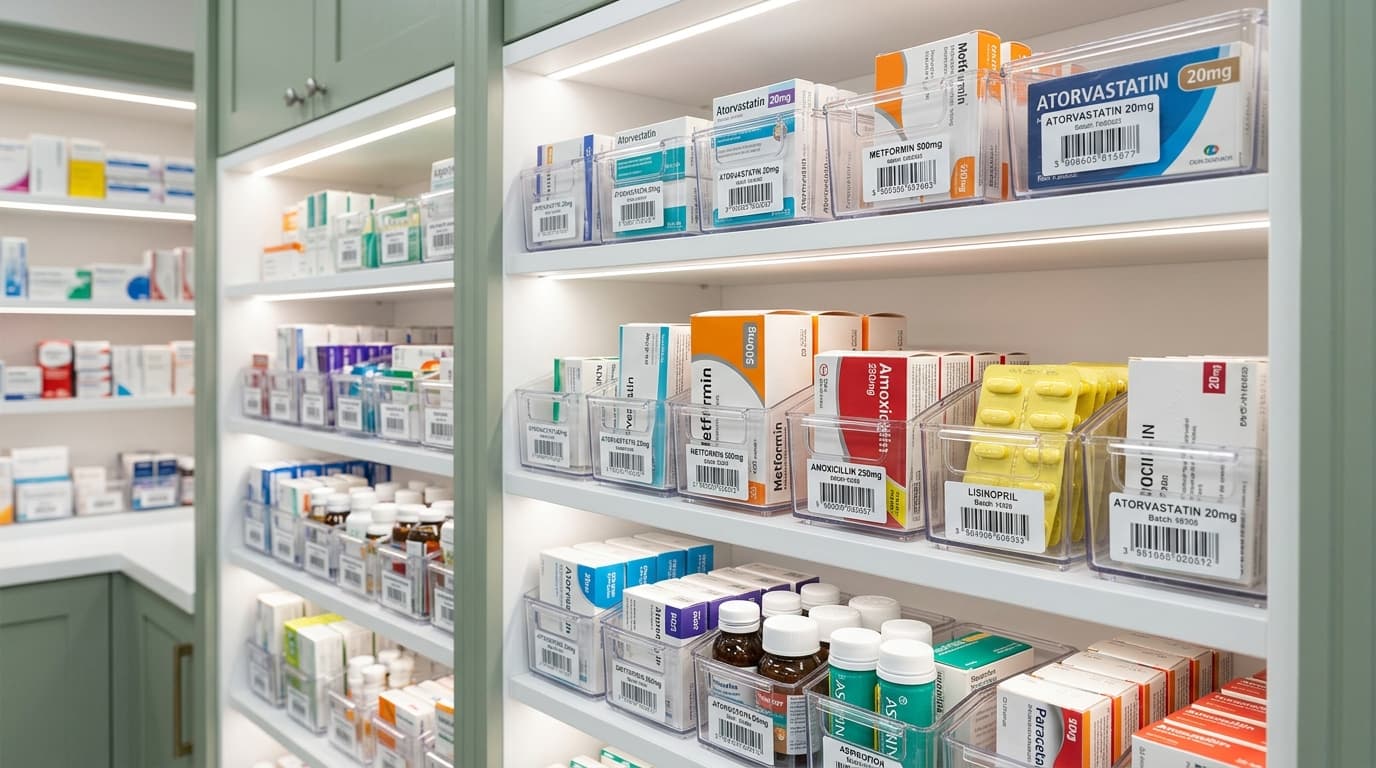
The hidden problem with product-level expiry dates
Most pharmacies record a single expiry date against a product name. When a new delivery arrives with a later date, the old entry gets overwritten — and the batch that is actually expiring soon disappears from view entirely. The medicine is still on the shelf, but your records no longer warn you about it.
This is not a rare edge case. Any medicine that sells steadily — Azithromycin 500 mg, Pantoprazole 40 mg, Cetirizine 10 mg — will have two or three batches sitting in the drawer at the same time, each with a different expiry date. Product-level tracking treats them as one, which means the earliest date is invisible until someone physically checks the strip.
What batch-level tracking actually means
Batch-level expiry tracking records every incoming batch as a separate stock entry. A single product might show:
- Batch A — 40 strips, expires March 2027
- Batch B — 25 strips, expires July 2027
- Batch C — 60 strips, expires November 2027
Each batch has its own quantity and its own countdown. When the system generates an expiry warning at 90 days, it flags Batch A — not the product as a whole — giving you time to push those strips first or arrange a return with the distributor.
Why it prevents real losses
1. Earlier warnings, fewer write-offs
When the warning is tied to the batch, it fires at the right time. A product whose latest batch expires in November will not mask the 40 strips of Batch A that expire in March. You get the alert in December, giving you a full quarter to move the stock.
2. FEFO dispensing becomes possible
First-Expiry, First-Out is the gold standard for pharmacy dispensing, but it is impossible to follow if you do not know which batch expires first. Batch-level tracking surfaces the answer automatically: every time you dispense or sell, the system points to the batch with the nearest date.
3. Distributor returns are straightforward
Many distributors accept returns of near-expiry stock if you flag it 60–90 days in advance. Without batch-level data, you only discover the problem at 30 days or less — past the return window. Batch tracking gives you the lead time to negotiate returns and recover cost.
4. Write-off records are accurate
When you do write off expired stock, recording it at the batch level tells you exactly how many units were lost, at what purchase price, and from which distributor. That data feeds into better ordering decisions the next quarter.
A practical example
Consider a pharmacy that stocks Amoxicillin 500 mg capsules. In January it orders 100 strips (Batch X, expiry June 2027). In April, demand picks up and it orders another 80 strips (Batch Y, expiry December 2027). By May, 30 strips of Batch X remain.
With product-level tracking, the system shows "Amoxicillin 500 mg — 110 strips — Dec 2027." No alert fires. In June, 30 strips expire unnoticed and are written off.
With batch-level tracking, the system shows two rows. In March — 90 days before expiry — it flags Batch X. The pharmacist moves those strips to the front counter and sells through them by May. Zero write-off.
The difference is not in the software's intelligence. It is in the data model: one expiry date per batch instead of one per product.
What to look for in your inventory system
If you are evaluating pharmacy software — or auditing the one you already use — ask these questions:
- Does a new delivery create a new batch entry, or does it merge into the existing product quantity?
- Can you see every batch of a product on one screen, each with its own expiry and quantity?
- Do expiry alerts fire per batch, with enough lead time to act?
- When stock is dispensed, does the system suggest the earliest-expiring batch first?
If the answer to any of these is no, your system is hiding risk. Batch-level tracking is not a premium feature — it is the minimum resolution at which pharmacy expiry management actually works.
Want to Implement This in Your Medical Store?
Pharmist AI automatically organizes your medicine batches by earliest expiry, alerts you 90 days out, and turns paper invoices into stock in 60 seconds.